
The Civet Project Challenges Industry Silence on Cruel Coffee Trade


The Civet Project attends London Coffee Festival to call for industry action against the worlds cruellest coffee with new campaign: “Civet-Free; Confronting the stain on the coffee industry".
The global coffee industry can no longer turn a blind eye to the profound animal suffering brewing in its supply chain. Following our eye-opening investigative e-commerce report and documentary, the Civet Project Foundation is calling on coffee companies around the world to actively discredit and reject civet coffee.
This week, we are taking our "Civet-Free" campaign directly to the industry, exhibiting at the upcoming London Coffee Festival (May 14–17, 2026, at The Truman Brewery, Stand M10). There, we will bring together coffee lovers and coffee professionals to confront the glaring ethical blind spot in the specialty coffee world.
What is civet coffee?
Civet coffee, or “kopi luwak”, is marketed as a luxury product made from coffee beans that have passed through the digestive tract of Asian Palm civets, small nocturnal mammals native to Southeast Asia. Once hailed as the rarest and most expensive coffee in the world, with some cups priced as high as £50, civet coffee is now widely sold online for as little as £15 per packet.
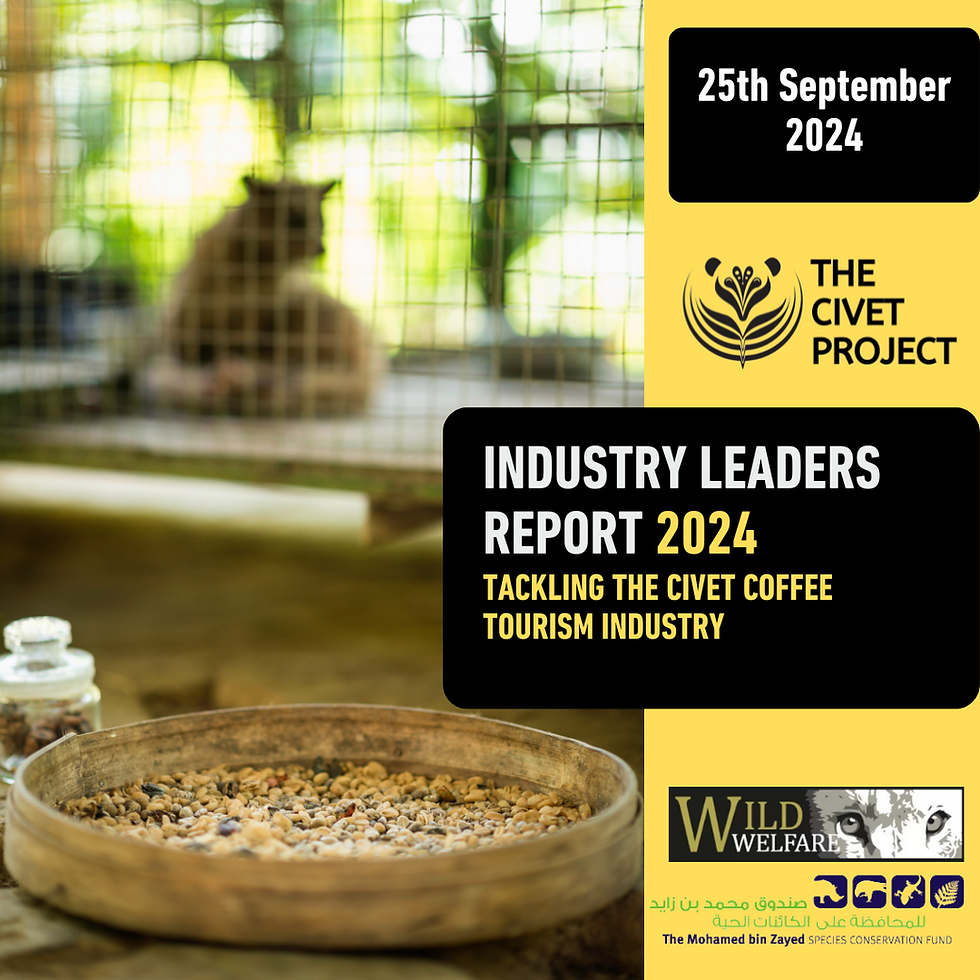
Our latest campaign is driven by the alarming findings of our 2025 Industry Leaders report that reviewed the sale of civet coffee on Amazon, eBay and Etsy. Our investigation exposed widespread policy breaches and fraudelent claims such as “100% wild collected”, “high welfare” and “certified cage-free” alongside named “certifiers”.
Our investigation showed that civet civet coffee products that claimed certification from named organisations for being 'wild collected' or 'cage-free', were all either fraudulent or untraceable. Shockling, civet coffee retailers falsely claimed certification from organisations such as WWF, Rainforest Alliance, and World Animal Protection, all of whom confirmed no affiliation with civet coffee or the brands in question.
The consumer standards, animal welfare, environmental and sustainability issues associated with civet coffee products actively breach seven platform policies employed by Ebay, Amazon and Etsy. And, these misleading practices violate UK consumer protection laws, including the CMA Green Code and the Digital Markets, Competition and Consumers Act 2024.
By selling civet coffee with fraudulent animal welfare claims, sellers and platforms exploit consumer interest in animal welfare. False welfare assurances deceive consumers into purchasing products that are reliant on animal suffering. Our award-winning investigative documentary, “Civet Coffee; From Rare to Reckless” also exposed the physical realities of civets caught up in the trade, with horrific welfare conditions including small wire cages, consumer deception and the wider ramifications of disease spread and the snaring crisis.
Dr Jes Hooper, CEO of The Civet Project:
“For too long, the coffee industry has prided itself on ethical sourcing and sustainability while completely ignoring the brutal reality of civet coffee. By not acknowledging how these products are a stain upon the industry, they allow it to continue with its “luxury specialty coffee” reputation. It is our hope that our campaign will lead to greater action within the coffee industry itself”
Call to action
We are calling on all coffee companies, big and small, to publicly cut ties with the civet coffee industry and pledge to be a “Civet-Free” company. This action is vital to shutting down a cruel, unethical and dangerous industry that risks not only civets themselves, but threatens disease outbreak and worsens the biodiversity crisis.
The Civet Project has also called on consumers to speak up for their consumer rights and sign the petition to demand that eBay, Amazon and Etsy ban the sale of civet coffee across their platforms due to its widespread policy breaches and un-certifiable nature.


mm88 link khiến tôi quan tâm đến tốc độ phản hồi khi chuyển đổi liên tục giữa nhiều khu vực trên nền tảng. Tôi thường mở từng danh mục rồi quan sát thời gian nội dung xuất hiện trước khi thực hiện thao tác tiếp theo. Trong quá trình trải nghiệm, tôi kiểm tra Thể thao, Casino và Đá gà để theo dõi khả năng phản hồi khi thay đổi nhóm nội dung. Tiếp tục với Bắn cá, Nổ hũ và Xổ số, tôi chú ý xem giao diện có giữ được trình tự hiển thị quen thuộc hay không. Nếu thao tác chuyển trang được phản hồi rõ thì tôi dễ biết yêu cầu của mình đã được tiếp nhận…
https://mm88.today/ là địa chỉ tôi dùng để kiểm tra cách các danh mục được cập nhật khi số lượng nội dung trong mỗi nhóm thay đổi. Tôi mở những khu vực có nhiều trò chơi rồi quan sát thứ tự xuất hiện của các mục khi chuyển sang một danh mục khác và quay lại. Nếu vị trí nội dung thay đổi quá mạnh mà không có dấu hiệu nhận biết, tôi sẽ khó nhớ mình vừa xem đến đâu. Vì vậy tôi thực hiện thao tác chuyển qua lại vài lần để kiểm tra sự ổn định của danh sách. Tôi cũng quan sát cách các mục được tải thêm khi cuộn xuống thay vì chỉ xem phần đầu tiên.…
https://uu88.army/ Tôi thử đọc các nội dung khuyến mãi theo cách kiểm tra điều kiện thay vì chỉ nhìn tiêu đề chương trình. Tôi mở từng phần thông tin và chú ý những nội dung như thời gian áp dụng, đối tượng, điều kiện đi kèm và cách xác định trạng thái đủ điều kiện nếu có. Nếu một chương trình có nhiều cấp thành viên hoặc nhiều trường hợp khác nhau, tôi xem cách phân tách thông tin có đủ rõ để tránh đọc nhầm hay không. Tôi cũng kiểm tra xem các điều khoản có được đặt gần nội dung chính hay phải chuyển qua một trang khác mới tìm thấy. Sau đó, tôi quay lại danh sách để…
luckywinz.dev khiến mình quan tâm đến cách một phiên vẫn dễ theo dõi dù mình chuyển nội dung theo thứ tự khá ngẫu nhiên. Mình có thể bắt đầu với Bắn cá, sang Xổ số rồi quay qua Slot mà không cần thiết lập một đường đi cố định từ trước. Mỗi danh mục tạo một điểm nhận diện riêng, còn cấu trúc điều hướng đóng vai trò kết nối những lần chuyển đó. Sau một vài thao tác, mình thường nhớ vị trí tương đối của các khu vực và chọn trực tiếp hướng muốn đi tiếp. Nhờ vậy, việc thay đổi lựa chọn nhiều lần không khiến phiên sử dụng trở nên rời rạc hoặc buộc mình phải quay…
UU888 khiến mình chú ý đến cách phần bảo mật được đặt trong khu vực tài khoản khi mình đang sử dụng Casino. Mình chuyển sang lớp chức năng cá nhân và quan sát cách các lựa chọn liên quan được phân chia khỏi phần giải trí. Bố cục khác biệt giúp mình nhận biết rõ trạng thái thao tác đã thay đổi. Sau khi kiểm tra phần cần thiết, mình mở Thể thao từ menu chung thay vì lần ngược lại những trang vừa đi qua. Cách hệ thống tách chức năng cá nhân thành một nhánh riêng giúp mình xác định từng lớp khá rõ, trong khi đường điều hướng vẫn kết nối với những danh mục chính của…